Inside the Waypoint Montessori Elementary Program: A Journey from Concrete to Abstract
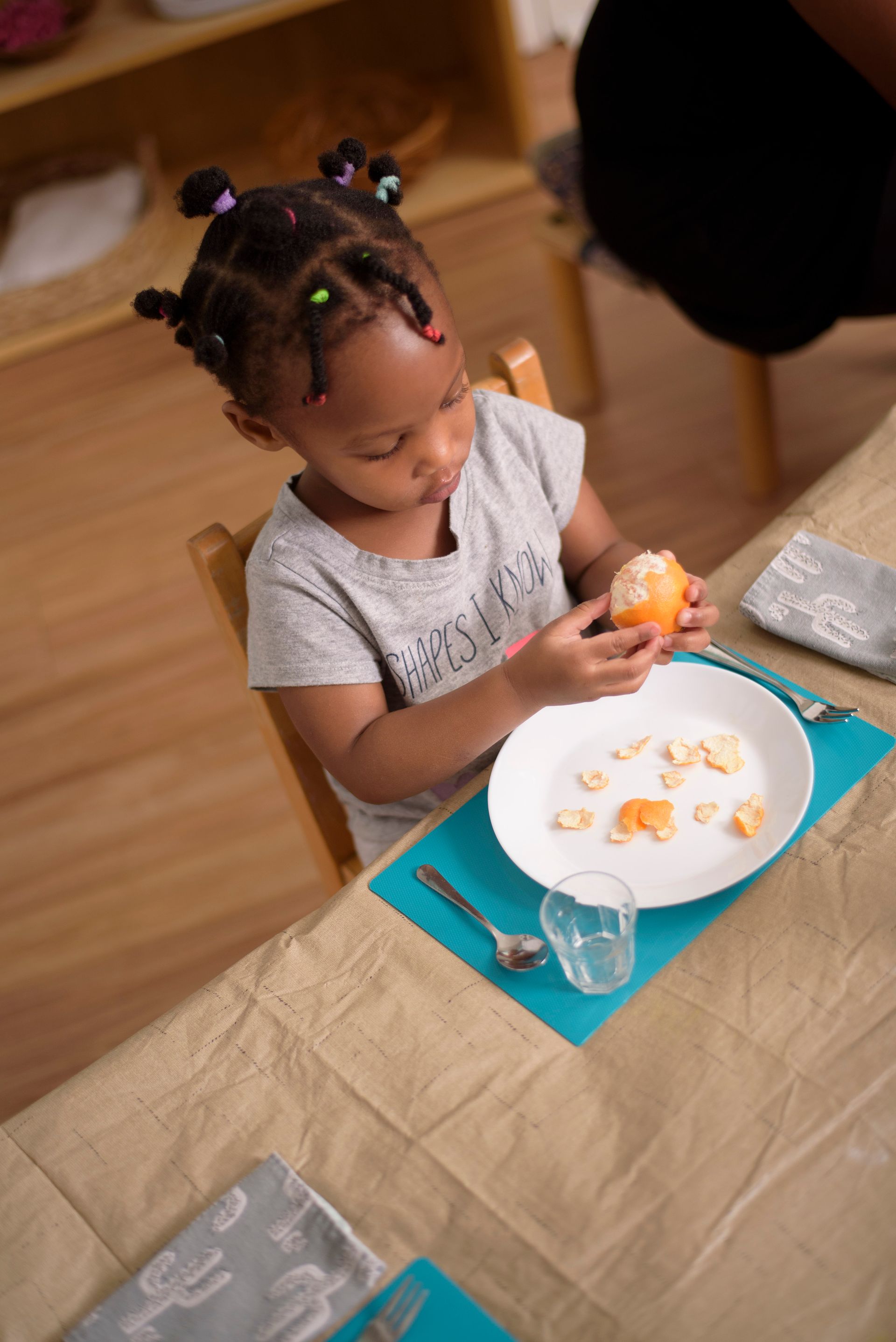
When children transition from the Primary environment (ages 3–6) to the Elementary program (ages 6–12), a profound shift takes place. The young child who was previously focused on mastering their immediate physical environment and sensory coordination transforms into a cosmic explorer.
At Waypoint Montessori, our Association Montessori Internationale (AMI) recognized Elementary program is meticulously designed to meet the unique psychological and social needs of this second plane of development. Nestled on our peaceful nine-acre campus in Colleyville, our Elementary environments provide students with the freedom, structure, and community required to take ownership of their education.
The Characteristics of the Second Plane Child
Dr. Maria Montessori observed that around the age of six, a child's natural developmental priorities shift. While the Primary child asks "What is it?", the Elementary child intensely demands to know "Why?" and "How?"
This stage of development is characterized by three distinct superpowers:
- The Power of Imagination: Elementary students are no longer confined to what they can physically touch. They use their imagination to travel through history, conceptualize the vastness of outer space, and explore abstract mathematical laws.
- A Strong Moral Compass: Children at this age are deeply preoccupied with concepts of fairness, justice, and rules. They want to understand right from wrong and investigate the ethical mechanics of human society.
- The Social Instinct: The Elementary child is naturally drawn to peer groups. While the Primary child often works independently alongside others, the Elementary child thrives on collaborative, team-based exploration.
The Five Cosmic Great Lessons: A Curriculum of Totality
Instead of teaching subjects in isolated compartments—such as math at 9:00 AM and geography at 10:30 AM—the Montessori Elementary curriculum is integrated and holistic. We present what Dr. Montessori called Cosmic Education.
At the beginning of every school year, our AMI-trained guides present The Five Great Lessons. These are impressionistic, sweeping stories told with dramatic experiments, timelines, and charts. They are designed to ignite the child's imagination and provide a grand framework for all future research.
- The Coming of the Universe and the Earth: An exploration of physics, chemistry, and astronomy that details how our planet formed.
- The Coming of Life: A journey through biology, botany, and zoology, tracking life from single-celled organisms to the age of the dinosaurs and mammals.
- The Coming of Human Beings: An investigation into history and anthropology, highlighting the fundamental needs of humans and the gifts of the human hand and intellect.
- The Story of Writing: A look at human communication, language, grammar, and literature through the history of glyphs, symbols, and alphabets.
- The Story of Numbers: An exploration of mathematics, geometry, and tracking systems from ancient civilizations to modern numbering systems.
Every Great Lesson sparks countless paths of individual and group inquiry. A single story might inspire one group of students to research ancient Egyptian hieroglyphs, while another group dives into the chemistry of volcanic eruptions.
Group Work, Freedom, and Accountability
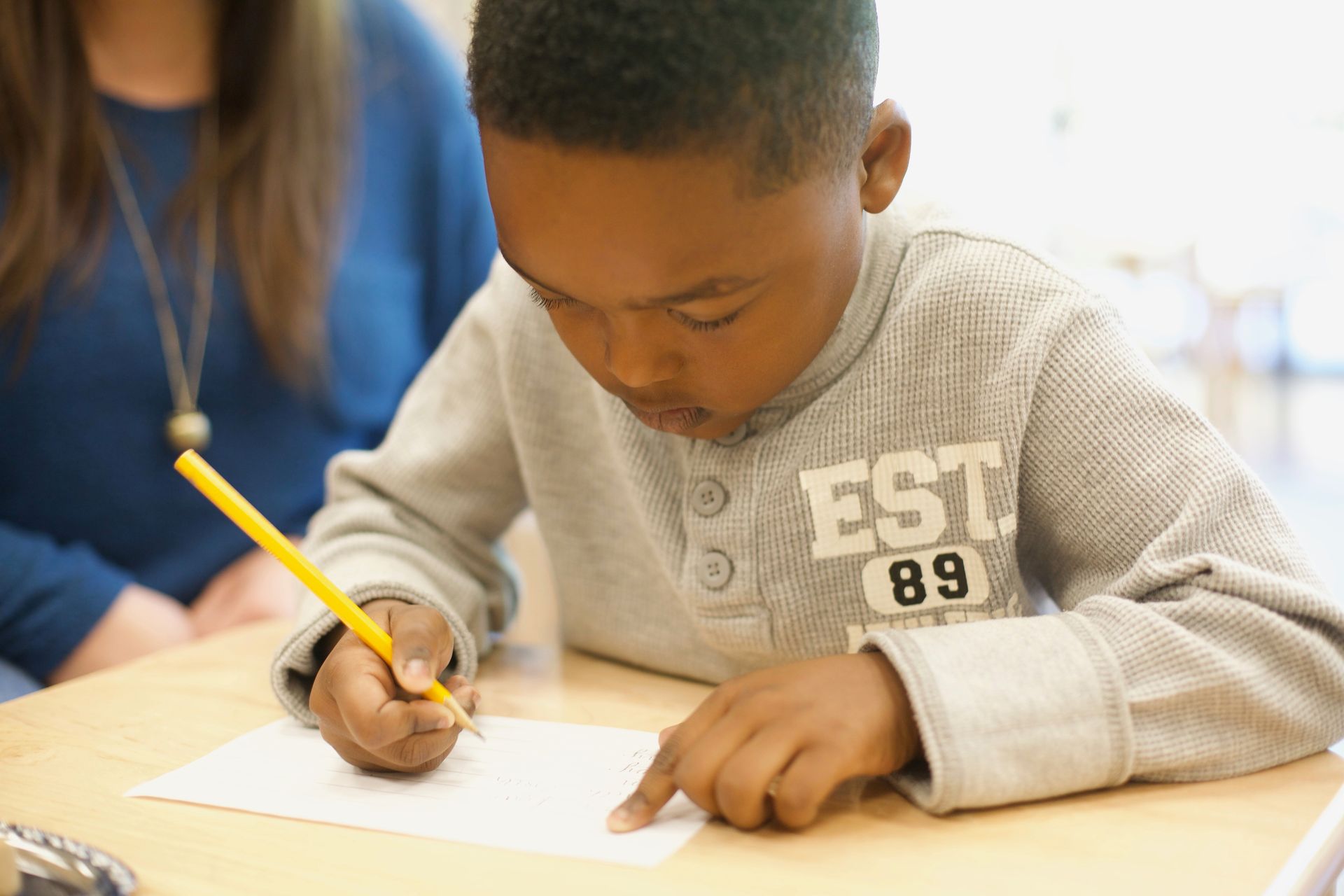
Because social connection is a driving force for 6-to-12-year-olds, almost all work in our Elementary classrooms is collaborative. Students form small groups to solve complex math equations, build timelines of prehistoric life, or write scripts for historical re-enactments.
With this freedom comes a highly structured framework of personal accountability. Students use daily or weekly work journals to plan their projects, budget their time, and track their progress.
The guide meets regularly with each student individually to review their work journal, ensure a balanced distribution of academic areas, and help them refine their time-management skills. This balance teaches internal discipline, organization, and true independence.
"Going Out": Extending Beyond the Classroom Walls
An essential component of the Waypoint Montessori Elementary experience is an operational process called Going Out.
When a traditional school takes a field trip, the adult plans the destination, books the bus, and guides the passive group. In a Montessori environment, a "Going Out" is completely conceptualized, planned, and executed by a small group of children based on a real need in their research.
If a group is studying native Texas flora and needs resources beyond our close to 10,000-title library campus resources, they must organize the trip themselves. They will:
- Locate a local botanical expert or conservatory.
- Call or email to check availability and arrange an interview.
- Calculate the transit details.
- Arrange for an adult chaperone to drive them.
Through this practical experience, children learn that the classroom is merely a launching pad, and the entire world is their laboratory. They build profound confidence by interacting directly with the broader community.
Laying the Groundwork for Life
The ultimate goal of the Elementary program at Waypoint Montessori is not standardized testing or rote memorization; it is the formation of a complete, capable, and culturally aware individual.
By allowing children to pursue their intellectual passions within a collaborative and supportive framework, we preserve their natural curiosity and nurture a lifelong love of learning. Our Elementary graduates leave our environments as confident problem-solvers, respectful citizens, and articulate leaders who are ready to make a positive impact on the world.
If you would like to see our Elementary environments or our unique nine-acre campus in action, we invite you to schedule a tour with our admissions team
You might also like