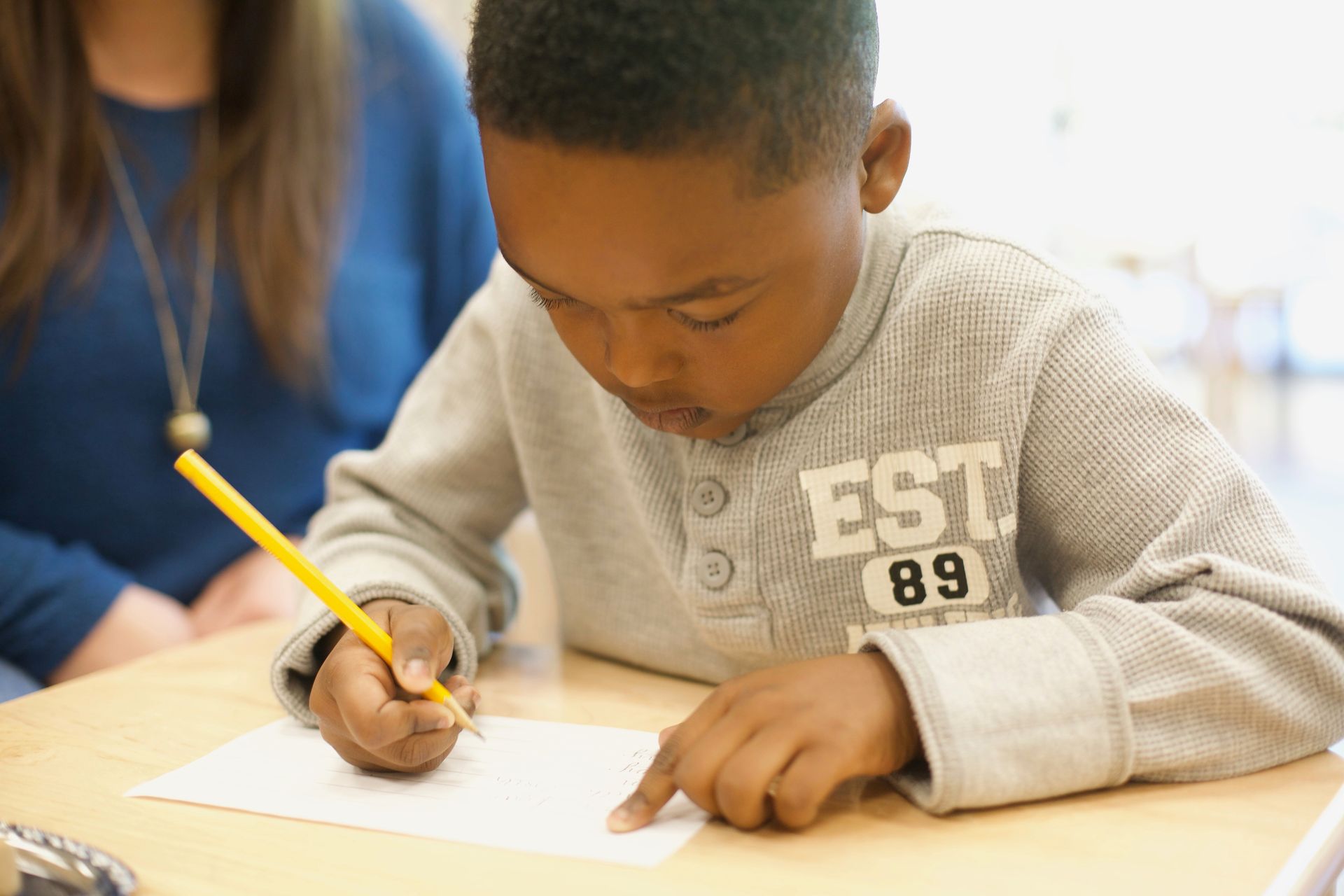
The Art of the Three Period Lesson: How We Connect Children to Language and Concepts at Waypoint Montessori
In Montessori education, we use a beautiful, subtle art for connecting children to new concepts and precise vocabulary. This technique is called the Three Period Lesson. Developed by Dr. Maria Montessori, this structured approach introduces and reinforces new language in a way that respects a child’s natural developmental tendencies.
At Waypoint Montessori, our AMI-trained guides utilize this three-phase lesson across our environments—from Toddler through Primary and Elementary—to build a strong foundation for lifelong learning. Each period serves a crucial, distinct purpose in helping the child absorb and master new ideas.
The First Period: Naming (Introduction)
In the first phase of the lesson, our focus is entirely on helping the child create a direct association between an object or sensory perception and its exact name. While this seems like a simple vocabulary statement, its execution requires extreme exactitude from the guide.
To minimize confusion, we isolate the concept completely and avoid any peripheral information or unnecessary chatter. The emphasis here is on clear articulation, brevity, and repetition, allowing the child to absorb the language through focused auditory and visual cues.
For example, if a guide is introducing temperature concepts to a young child in the Primary environment, they might use our thermic bottles:
- The guide isolates the hottest and coldest bottles.
- The guide touches the hot bottle, invites the child to feel it, and says clearly: "This is hot."
- Next, they follow the exact same procedure with the cold bottle, stating: "This is cold."
By keeping the language precise and omitting extra descriptions, the guide helps the child connect a direct sensory impression with its correct linguistic index, fixing the concept clearly in the mind.
The Second Period: Association (Recognition)
The second phase is the longest and most vital part of the lesson, serving as the ultimate aid to the child's memory. Here, the goal is to see if the child recognizes the object or quality when named. We do not ask the child to say the word yet; instead, we design a series of lively, hands-on games and declarative commands that encourage active movement and repetition.
Using a geometry lesson or a cylinder block as an example, a guide might say:
- "Show me the large cylinder."
- "Point to the small cylinder."
- "Place the large cylinder in my hand."
This active participation allows the child to repeatedly pair the spoken vocabulary with the physical object. Every successful association strengthens the neural pathways and deepens understanding.
What happens if a child makes a mistake? If a child points to the wrong object, a Montessori guide will never correct or embarrass them. Pointing out errors can cause a child to feel defeated or self-conscious. Instead, the guide simply notes that the association isn't fully formed yet. We might gracefully end the lesson to try again another day, or gently return to the First Period to re-associate the word with the object.
The Third Period: Recall (Verification)
The final part of the lesson is a brief verification of mastery. For the first time, the guide withholds the vocabulary and asks the child to produce the word from memory.
The guide points to an object and simply asks: "What is this?"
If the child readily names the item, the association is complete. If the child hesitates or misnames it, the guide softly steps back to the first or second period without correction, ensuring the child leaves the environment with an accurate, positive impression. Once the lesson concludes, children often return to the materials with a renewed sense of enthusiasm and ownership over their learning.
Why This Approach is So Powerful
The beauty of the Three Period Lesson lies in how naturally it aligns with childhood development. It succeeds because it honors three core principles:
- Respect for the Individual Pace: By breaking concepts into digestible, distinct phases, we ensure that learning is never rushed and meets every child exactly where they are.
- Active, Joyful Engagement: Moving objects, pointing, and participating in game-like exploration ensures children are active drivers of their education rather than passive recipients of facts.
- Connecting the Concrete to the Abstract: By tying precise language directly to physical, sensory experiences, we lay the groundwork for complex, abstract reasoning in the years to come.
The Three Period Lesson is just one of many intentional, time-tested tools our guides use to nurture independent, capable thinkers.
We invite you to experience the calm, focused energy of our beautiful nine-acre campus in Colleyville. Please schedule a tour and see these intentional lessons in action across our classrooms.
You might also like