Inside the Prepared Environment: The Joy and Purpose of Waypoint’s Toddler Program
For a child between the ages of 14 and 36 months, the world is a vast, magical laboratory waiting to be explored. Toddlers are driven by an intense, internal need to move, communicate, and say to the adults in their lives: “Help me do it by myself.”
At Waypoint Montessori, our Toddler program is not a daycare or a place of passive supervision. It is a carefully curated, dynamic ecosystem designed explicitly to meet the rapid developmental shifts of this incredible age group.
If you have ever wondered what a typical day looks like or how we channel all that boundless toddler energy into meaningful growth, let's pull back the curtain on the magic of our Toddler community.
The Prepared Environment: Built for Them, Not Us
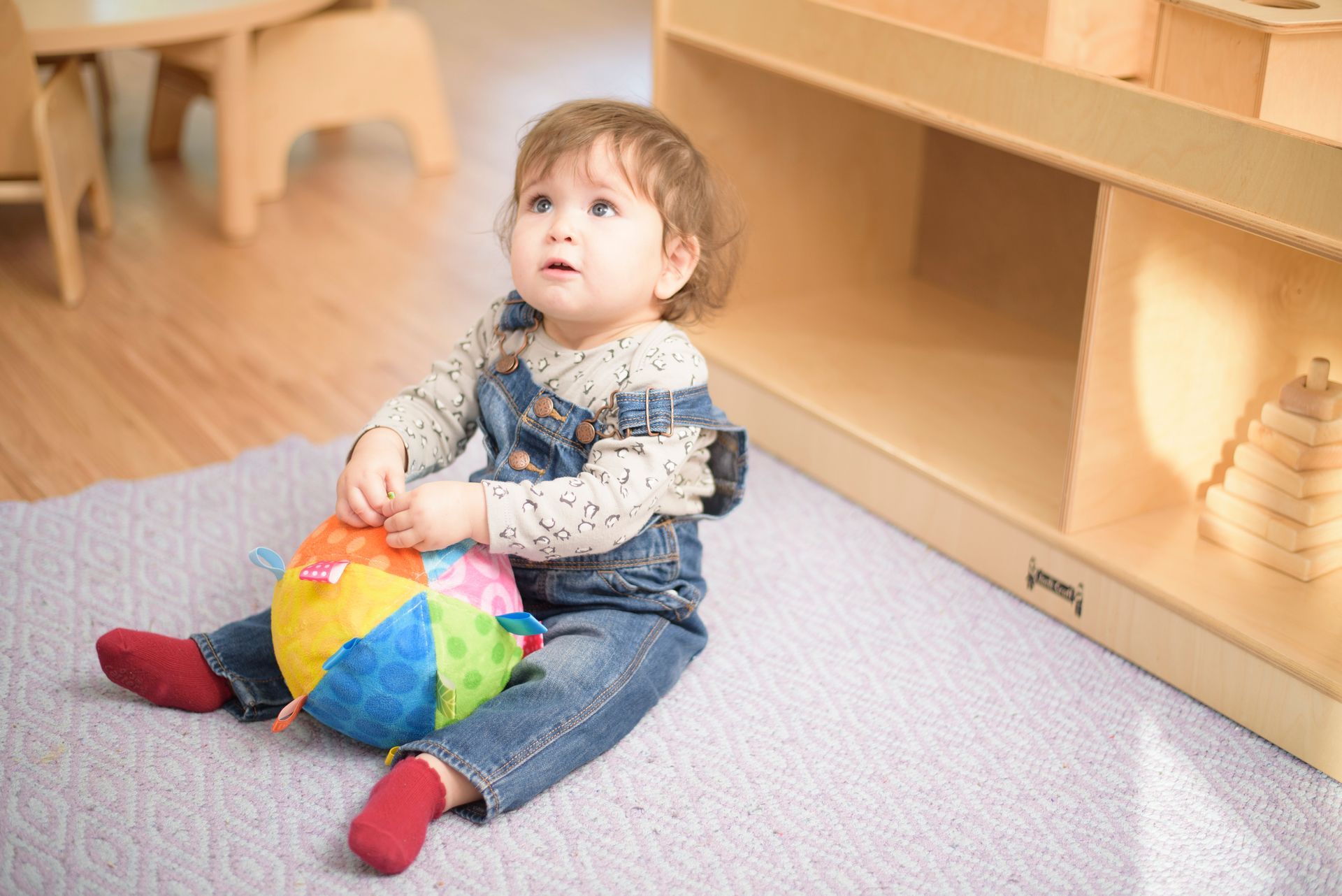
The moment you step into a Waypoint Toddler classroom, you will notice that it feels vastly different from a traditional playroom. There are no bright flashing plastic toys, no baby gates, and no clutter. Instead, you will see beautiful natural wood, low shelves, real plants, and low-hanging art hung at a toddler’s exact eye level.
Everything in this space is intentionally scaled to their physical size. The chairs and tables are light enough for a child to move independently. The pitchers are small enough for tiny hands to pour from, and the cleaning tools—like brooms and dustpans—are fully functional, miniature versions of the ones we use at home.
By removing the physical obstacles that usually require an adult’s intervention, we grant toddlers the gift of true autonomy. In this space, they are capable, trusted citizens.
The Power of Practical Life
In a Montessori environment, we refer to the everyday tasks of living as Practical Life. While an adult might view washing a table or peeling a banana as a chore, a toddler views it as an exhilarating milestone.
On any given morning at Waypoint, you might look across the room and see:
- A 16-month-old carefully slicing a hard-boiled egg with a child-safe slicer.
- A two-year-old using a small spray bottle and cloth to meticulously clean a mirror.
- A small group of children independently setting the table for lunch, placing real ceramic plates and glass cups on cloth placemats.
These activities are not just about learning how to keep a room clean or prepare food. They are the foundation of cognitive and physical development. Pouring water refines fine motor control and hand-eye coordination. Following the multi-step sequence of washing a dish builds focus, memory, and executive functioning skills. Most importantly, successfully completing these tasks builds an unshakeable sense of self-worth and confidence.
Movement and Language: The Core Toddler Passions
Our Toddler community thrives on honoring the two greatest explosions of growth during this plane of development: movement and language.
Gross and Fine Motor Development
Toddlers do not learn by sitting still; they learn with their entire bodies. Our environment encourages freedom of movement. Children are free to walk across the room, carry heavy objects (which toddlers love to do to test their maximum strength), balance along floor lines, and work on the floor or at tables.
Language Acquisition
Our classroom Guides are highly trained observers who interact with children using precise, rich, and varied vocabulary. We don't use "baby talk." Instead, we name objects exactly as they are—identifying a "chrysanthemum" rather than just a "flower," or a "colander" rather than a "bowl." Through daily conversations, group singing, reading together, and phonetic objects, we support a massive explosion of expressive and receptive language.
The Heart of Community: Social and Emotional Grace
At this stage in life, toddlers are transitioning away from a purely self-centric view of the world and are learning how to exist in a community. Our mixed-age Toddler classrooms provide a beautiful social sandbox.
Through gentle grace and courtesy lessons modeled by our Guides, children learn how to wait for a material that a peer is using, how to walk carefully around someone else's work rug, and how to express their boundaries using words.
We also heavily prioritize toilet learning during these years. Rather than utilizing external rewards or stressful training systems, our Guides partner closely with families to help toddlers respond to their body’s natural signals, weaving toileting into the predictable, comforting rhythm of our daily school schedule.
A Consistent Bridge Between School and Home
The most successful experience for a toddler happens when school and home act as a seamless bridge. The independence your child cultivates at Waypoint during the day naturally wants to find expression at home in the evenings.
Whether your child is learning to put on their own shoes, helping fold laundry, or choosing their own work, the growth that happens in these early years lays the psychological foundation for everything that follows. Our Toddler program is the perfect stepping stone, preparing children beautifully to eventually transition into our mixed-age Primary (3–6 years) communities with deep confidence.
If you are ready to see how a room full of toddlers can work with quiet focus, deep joy, and profound independence, we invite you to
experience it for yourself.
You might also like